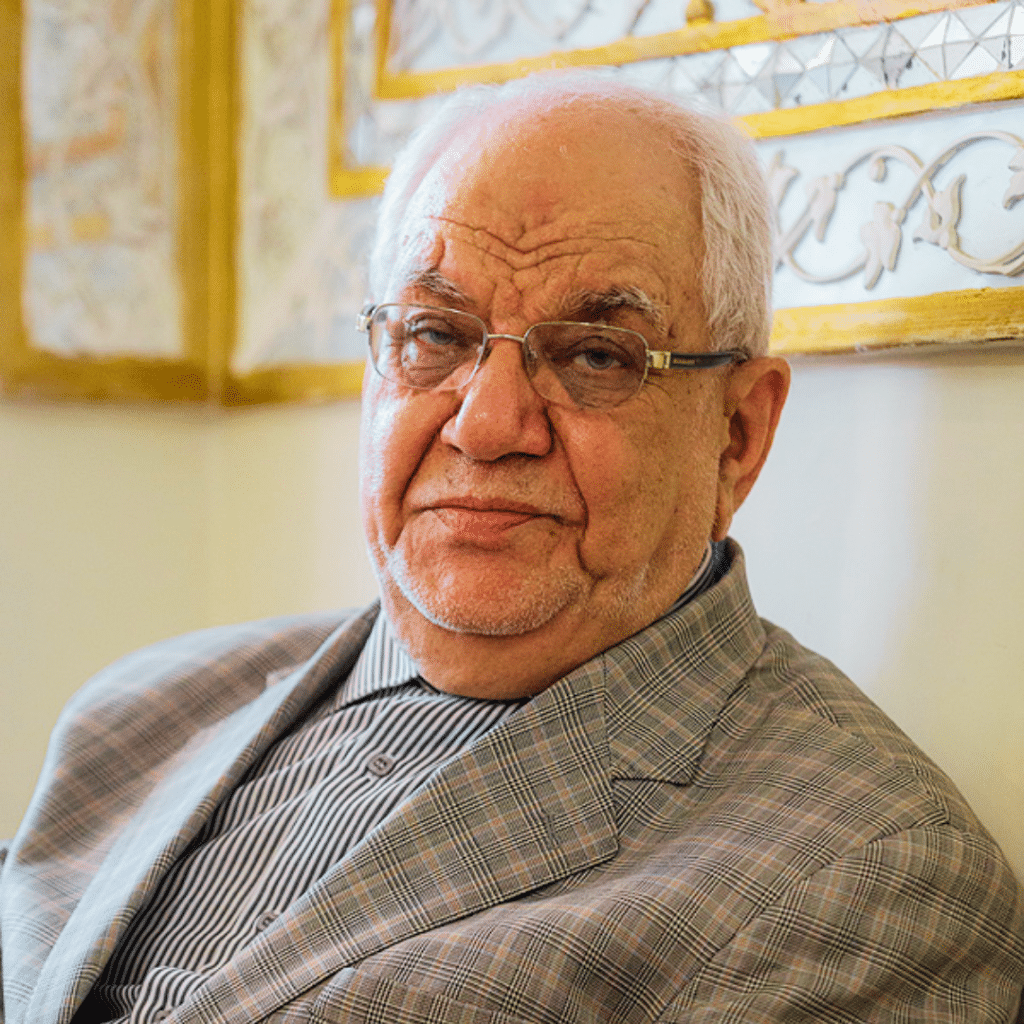
Professor Gholamreza Aavani is an Iranian philosopher and emeritus professor of philosophy at Shahid Beheshti University in Tehran. A former head of the Institute for Research in Philosophy, Professor Aavani is a member of the Academy of Sciences of Iran and a steering committee Member of the International Federation of Philosophical Societies. He has also served as the Kenan Rifai Distinguished Professor of Islamic Studies at Beijing University, China.
Professor Aavani graduated with a BA in philosophy in 1964 from the American University in Beirut. He received a master’s degree in philosophy from the University of Tehran in 1968 and acquired his PhD in 1976 from the same university under the supervision of Seyyed Hossein Nasr. Aavani has the greatest influence on expediting the process of development and expansion of Iranian philosophy. He is also a steering committee member of the International Federation of Philosophical Societies and the first president of the International Association of Islamic Philosophy.
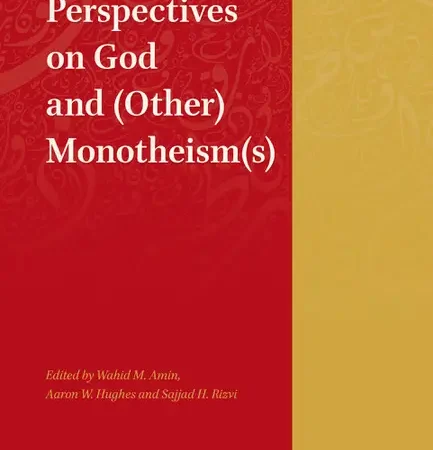
During his fellowship at AMI, Professor Aavani will be participating in two research conferences on the ‘Regulative Verses of the Qur’ān (āyāt al-aḥkām)’ and ‘Islamic Perspectives on God and (other) Monotheisms’. Additionally, Professor Aavani will also be teaching various modules on the Philosophy of Rumi and the Philosophy of Illumination.
Fellowship Experience:
Upon the recommendation of the esteemed Prof. Mustafa Mohaghegh Damad, head of the Islamic Studies Department at the Academy, I travelled to the Al-Mahdi Institute in Birmingham, England, for a period of three months (from 20th of February to 20th of May 2023). Undoubtedly, this institute is the best Shia studies institution in terms of education, training, and nurturing of the youth of today in the field of Islamic research. Through education, research, and various cultural activities at the international level, it has successfully provided an appropriate environment for the younger generation. The institute’s goal, which was established in 1993, is to educate future high-calibre Muslim thinkers in the West. It has managed to incorporate the latest scientific, research, and critical achievements of Shia seminaries into its curriculum, allowing students to be well-versed in Islamic and Shia teachings while also engaging with contemporary intellectual approaches. Another objective of this institution is to foster dialogue between different Islamic sects and other religions, and it has achieved remarkable success.
Al-Mahdi Institute (AMI) collaborates with the Islamic Studies Department at the University of Birmingham to award master’s degrees in the field of Islamic studies. It has trained students who have gone on to teach and conduct research in reputable seminaries and universities in the UK and beyond. AMI’s well-equipped library spans two floors, housing over 25,000 titles in languages such as English, Arabic, Persian, Turkish, and Urdu. Additionally, it features recent publications related to Islamic sciences. Esteemed scholars, including Ayatollah Prof. Mohaghegh Damad and Prof. Seyed Mohammad Ghari Seyed Fatemi contribute to teaching and organizing international seminars at AMI.
Al-Mahdi Institute is a non-governmental organisation (NGO) that holds consultative status with the United Nations Economic and Social Council (ECOSOC). Members of the institute have the right to participate in regular ECOSOC sessions, allowing them to engage with international developments across various fields and familiarize council members with Islamic perspectives.
In addition to specialised courses for its students, Al-Mahdi Institute offers a series of open courses to introduce both Muslims and non-Muslims to Islamic sciences and languages, including Arabic, Persian, and Urdu. Distinguished professors are involved in teaching these courses. Nearly all students at this institute are proficient in Arabic, and many also read Persian texts. Some of them have even studied at the Qom Seminary in Iran.
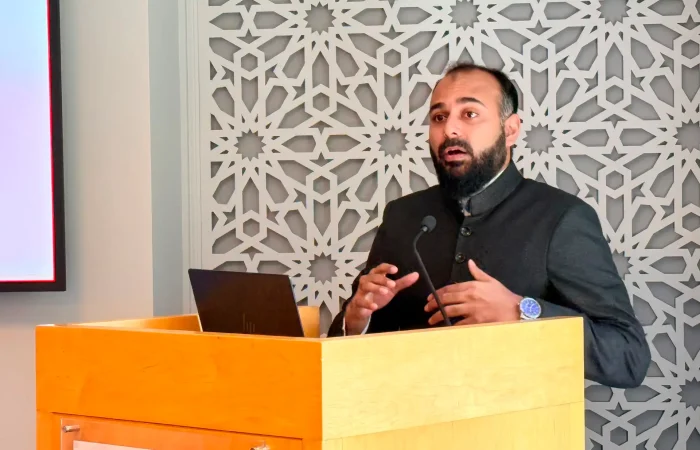
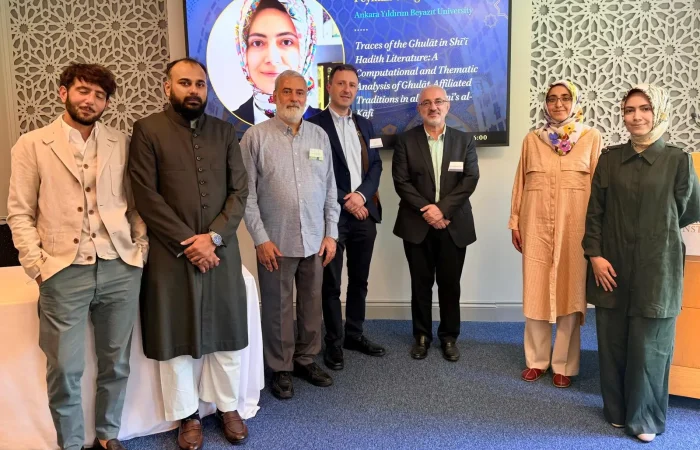
Furthermore, Al-Mahdi Institute has publications related to Islamic studies, including critical editions and English translations of some Shi’a Islamic texts. One of its significant activities is organizing regular international seminars featuring prominent scholars. During my three-month stay at the institute, five international seminars were held, covering topics such as the theory of evolution, monotheistic perspectives on God, the nature of the self, life after death, and the study of legal verses in the Qur’an. Articles from all past seminars have been published and are academically reputable on an international level.
During my three-month stay at this institute, I actively participated in all these seminars and presented two articles: one in the seminar titled “Islamic and Monotheistic Views on God” and another in the seminar on “Legal Verses in the Qur’an.” The first article focused on the concept of monotheism from the perspective of Jalal al-Din Muhammad Balkhi (Rumi) in his “Mathnawi.” Having previously written a book on the philosophical analysis of the “Mathnawi” in English, I took the opportunity to write another book specifically on the topic of monotheism from Rumi’s viewpoint, also in English. Before arriving at the Al-Mahdi Institute, I meticulously studied the entire “Mathnawi,” selecting approximately two thousand five hundred verses related to monotheism. I then composed a forty-page article using carefully chosen verses, which was well-received.
My second article was presented at the conference on Regulative Verses in the Qur’an.” In this article, I explored the perspectives of prominent Islamic thinkers—such as Farabi, Ibn Sina (Avicenna), Ghazali, and Mulla Sadra—regarding jurisprudence. I compared their various works and also discussed the position of legal verses in relation to other Qur’anic verses.
During my stay, I also taught two virtual courses upon the institute’s request. The first course focused on the mystical views of Jalal al-Din Muhammad Balkhi (Rumi) in the “Mathnawi,” based on my English book titled “Rumi, a Philosophical Study,” which is now taught at some universities in the UK and the US. The second course centred on the philosophy of illumination (Hikmah al-Ishraq), according to Sheikh Shahab al-Din Suhrawardi. I emphasised Suhrawardi’s unique insights and compared his philosophical system with those of Plato, Neoplatonists, and Aristotle, addressing contemporary philosophical issues.
Al-Mahdi Institute is situated in one of the most beautiful neighbourhoods in Birmingham. Originally a church, it was purchased by Shaykh Arif, the head of the institute, who transformed it into an Islamic institution after extensive renovations. The institute provides suitable and diverse spaces for classes, international seminars, office work, and accommodations for professors and students. It also has a mosque with a capacity of approximately two hundred worshippers. Although Friday prayers are conducted in the Shi’a style, Sunni brothers also participate, reflecting a complete sense of brotherhood in faith. During the blessed month of Ramadan, free iftar meals are served in the institute’s large dining room, where Muslims gather with their families. Friday congregational prayers are also held, with sermons delivered by institute professors or its alumni who teach or lead congregations in other cities. Additionally, the institute has a spacious hall for various celebrations and a prayer room for fulfilling religious obligations by followers of different faiths who attend its seminars.