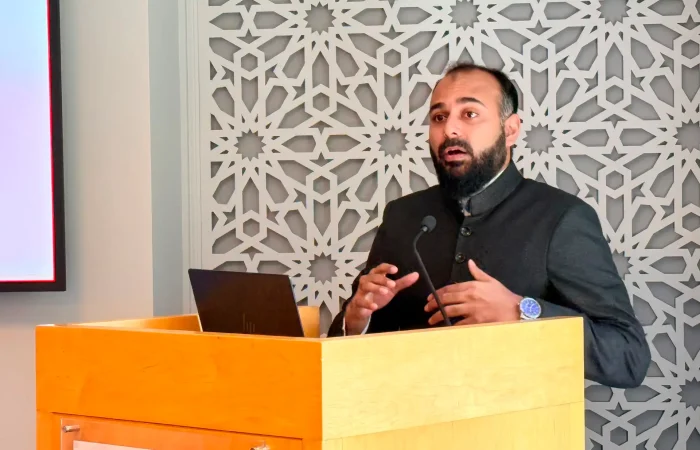
We are pleased to welcome Professor Mahmoud Morvarid to the Al-Mahdi Institute (AMI) as a Visiting Research Fellow in the field of Islamic Philosophy and Theology, where he will be undertaking a two-month research residency.
Professor Morvarid brings exceptional expertise to AMI, having pursued Islamic studies at the prestigious Seminaries of Mashhad and Qom in Iran before earning his PhD in analytic philosophy from the School of Philosophy at the Institute for Research in Fundamental Sciences (IPM) in Tehran, where he currently serves as a faculty member. His scholarly work spans metaphysics, philosophy of religion, philosophy of mind, Islamic philosophy, and Shiite Principles of Jurisprudence (uṣūl al-fiqh). He is particularly interested in exploring the rich connections between various branches of analytic philosophy and the intellectual heritage of the Islamic tradition, including philosophy, kalām, and uṣūl al-fiqh. Professor Morvarid has published extensively in both English and Persian.
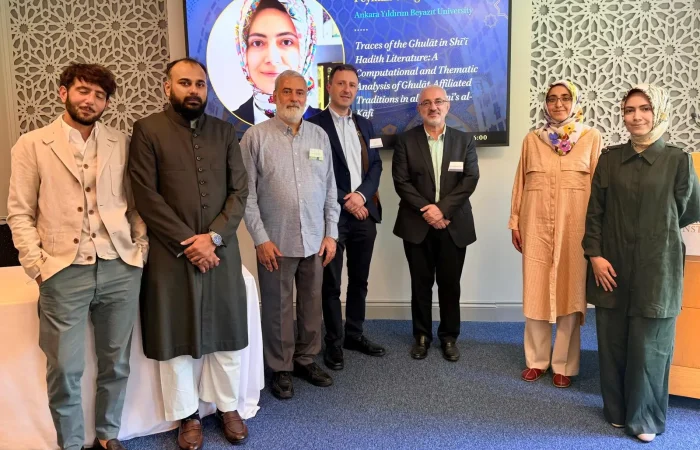
During his residency at AMI, Professor Morvarid will work closely with Dr Wahid Amin in the Department of Islamic Philosophy and Theology. He will participate in the Second Islamic Philosophy and Theology Conference organised by AMI in collaboration with Duke University titled “Islamic Perspectives on Prophecy and Revelation,” and the 13th annual Contemporary Fiqhi Issues conference titled “Reason and Rationality in Islamic Legal Theories and Law.” He will also deliver a research seminar on Ibn Sīnā’s metaphysics, offering key insights into this foundational figure in Islamic philosophy. Additionally, Professor Morvarid will play an active role in other research activities at the Institute, enriching our academic discourse and collaborative research efforts.
Post-Fellowship Experience:
During my time at AMI, I attended a workshop on Reason and Rationality in Islamic Law and Legal Theories organised by the AMI Department of Islamic Legal Studies, and another on Islamic Perspectives on Prophecy and Revelation jointly organised by the AMI Department of Islamic Philosophy and Theology and the Department of Religious Studies and Duke Islamic Studies Centre at Duke University. In addition, I delivered a seminar on Models of Revelation in the Islamic Tradition.
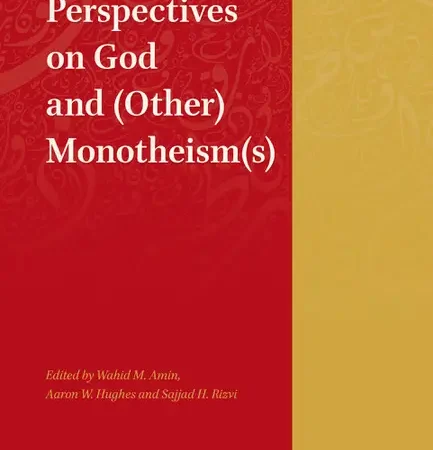
All of these workshops were intellectually stimulating, featuring highly knowledgeable participants from around the world who presented valuable papers. I greatly benefited from the thoughtful feedback and engaging discussions that followed, which significantly enriched my own work. The proceedings of AMI conferences are to be published by De Gruyter Brill, one of the world’s leading academic publishers in the humanities and social sciences, further reflecting the high scholarly standards of AMI’s academic activities.
One of the most remarkable aspects of AMI is its unique development. Established in 1993 primarily as a Twelver Shia hawza, it has steadily grown into an institution that, alongside its traditional seminary programme, now hosts six research departments devoted to various branches of Islamic studies. AMI thus offers a rare combination of the intellectual heritage of the Shia seminary tradition with rigorous modern scholarship. This hybrid model provides a dynamic and supportive platform for scholars—especially those interested in engaging Islamic traditions through contemporary approaches. The founders and members of AMI have accomplished truly remarkable work, and I sincerely hope that the Institute continues its steady process of development and progress in the years ahead.
In my own case, as someone working at the intersections of various branches of the Islamic intellectual tradition (including philosophy, kalam, and usul al-fiqh) and contemporary analytic philosophy, I found AMI’s academic environment both stimulating and motivating.
Beyond the academic activities, I was deeply impressed by the warm and welcoming atmosphere at AMI. The faculty, staff, and fellow scholars were consistently kind, generous, and supportive. Although my stay was relatively short, it proved to be both highly productive and personally enriching. I very much hope to have the opportunity to return to AMI in the future and to participate once again in its valuable and inspiring events.