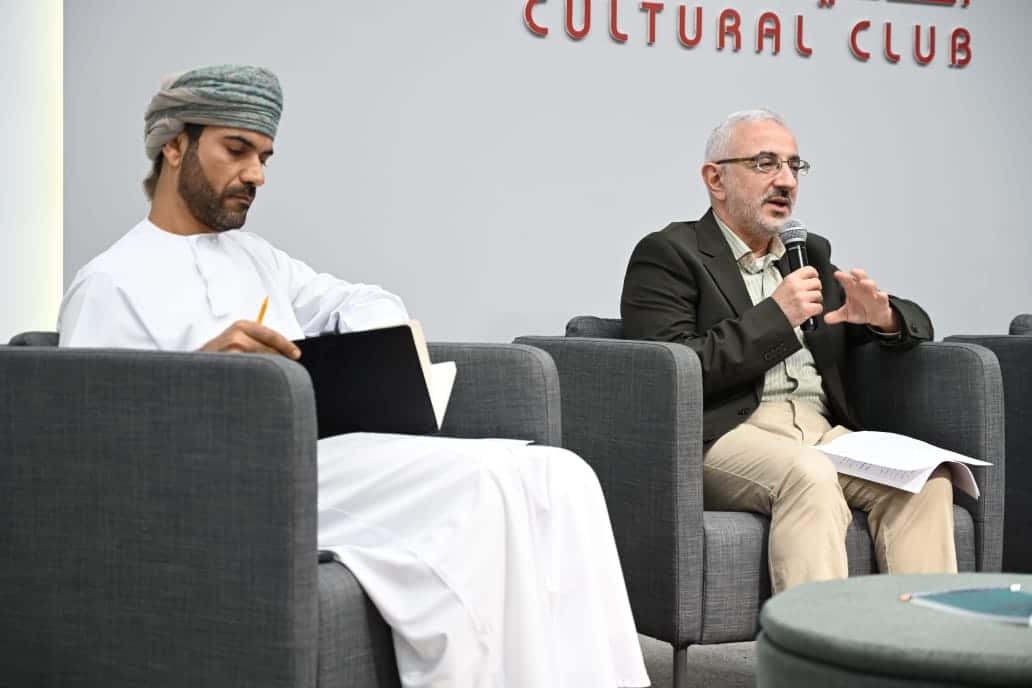
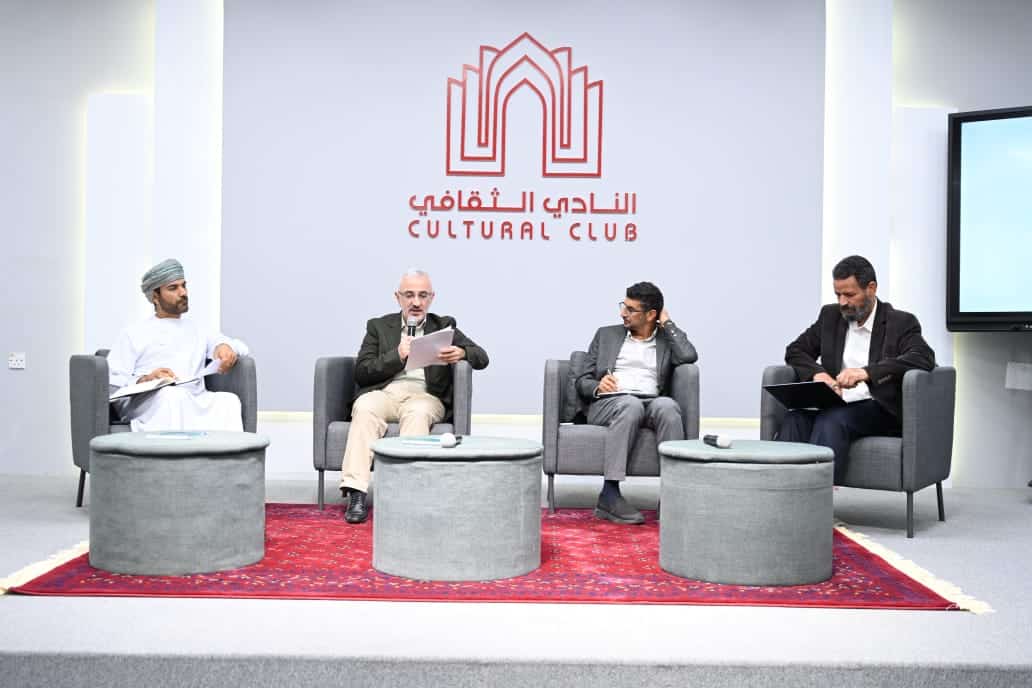
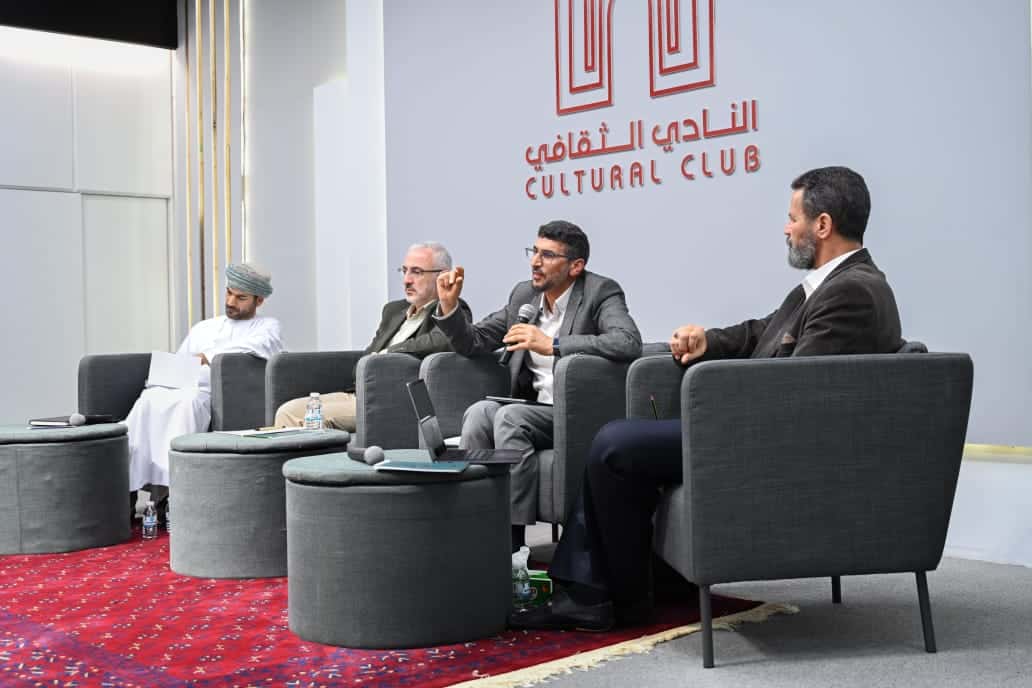
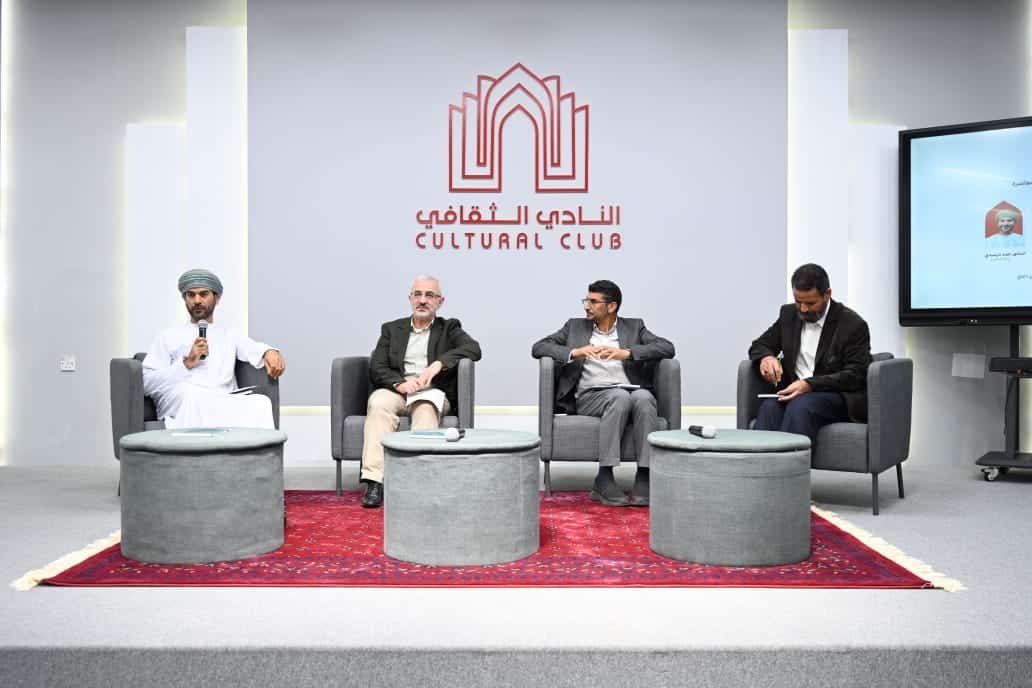
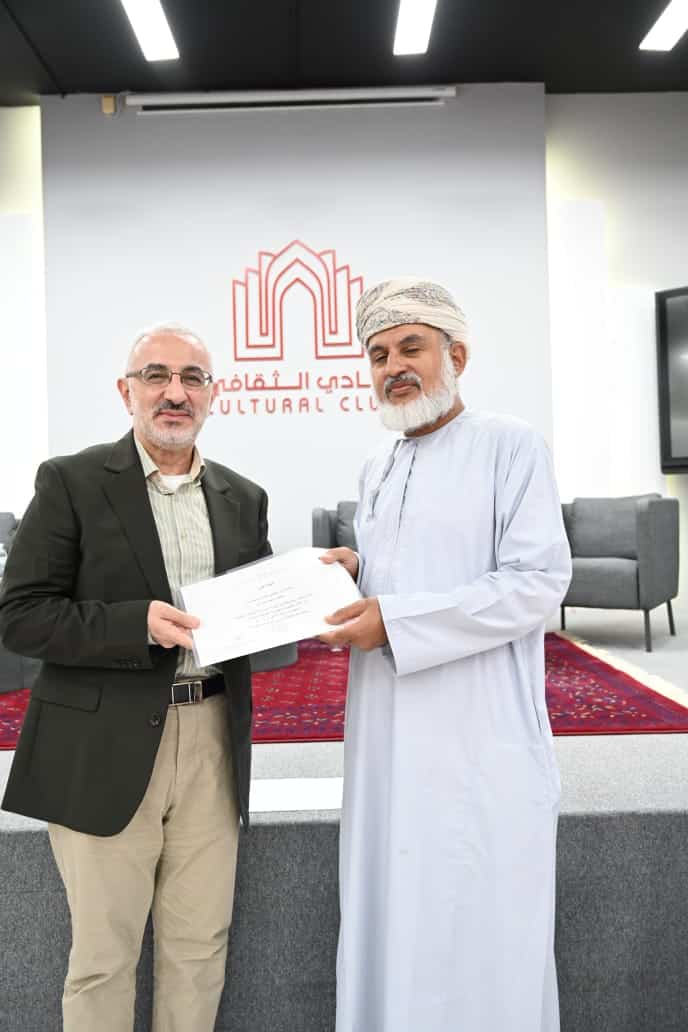
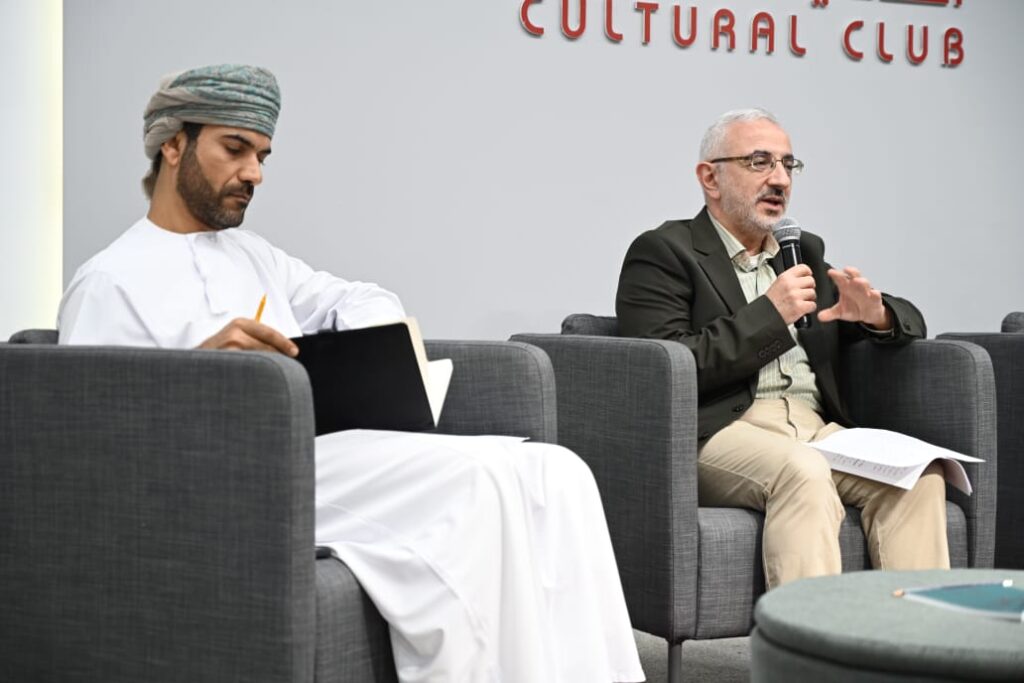
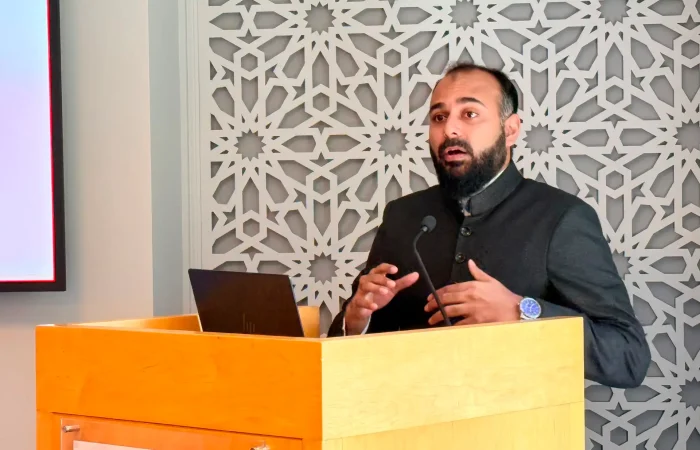
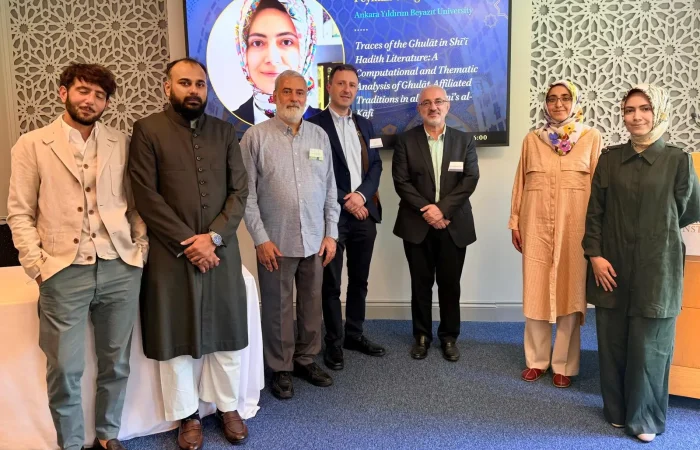
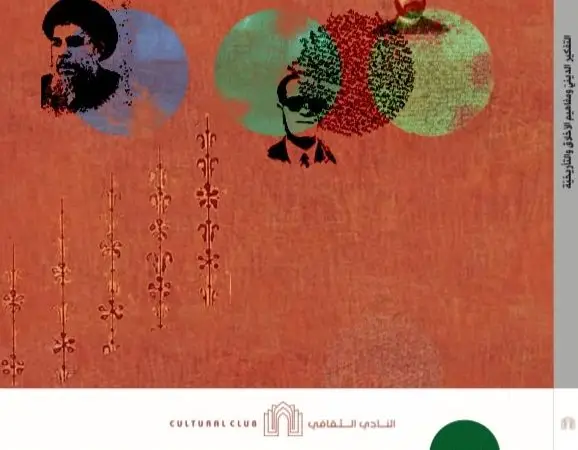
On 23rd February 2025, Dr Haidar Hobballah participated in a research seminar organised by the Omani Cultural Club in Muscat, Oman. The seminar was titled “Knowledge and Ijtihad: Between Traditional Mechanisms and Contemporary Methodologies.” A group of researchers from Lebanon, Yemen, and Tunisia also spoke at the event.
Dr. Hobballah delivered a lecture titled “Ethical Ijtihad in Deriving Sharia: Analysing Theories on the Relationship Between Religious Texts and Moral Reason.” In his speech, he addressed two schools of thought: 1. The school that prioritises textual authority over reason. 2. The school that grants reason authority over textual interpretation. When discussing the first school, Dr Hobballah—after highlighting the significance and sensitivity of the relationship between moral reason and Sharia—explained the foundations that led this school to limit the authority of reason and grant religious texts greater supremacy. He presented their philosophical justification, which doubts the ability of moral reason to independently assess human behavior, drawing from an Ash‘arite philosophical perspective. He also referenced Quranic texts suggesting that moral reason is incapable of making definitive judgments in contrast to divine revelation, thereby preventing moral reason from imposing oversight on religious legal rulings.
Following his analysis of the first school’s ideas and foundations, Dr. Hobballah discussed the second school, which upholds the authority of moral reason in ijtihad. He elaborated on some of its principles, particularly its epistemological approach, which views moral reasoning as probabilistic (ظني). However, this probabilistic nature does not necessarily undermine its authority, as religious texts themselves often carry probabilistic indications (ظنيات) rather than definitive meanings. Consequently, when faced with two competing probabilities—one derived from moral reasoning and the other from religious texts—one must prioritise the stronger of the two, in accordance with the rational principle of preferring the more compelling evidence. In such cases, moral reasoning can override certain outcomes of religious ijtihad without directly opposing clear and explicit religious texts. The seminar concluded with a series of questions, which the speakers addressed.
The proceedings of this event will be published in a book at a later date and can also be viewed on YouTube below.
Watch Seminar:
Gallery: