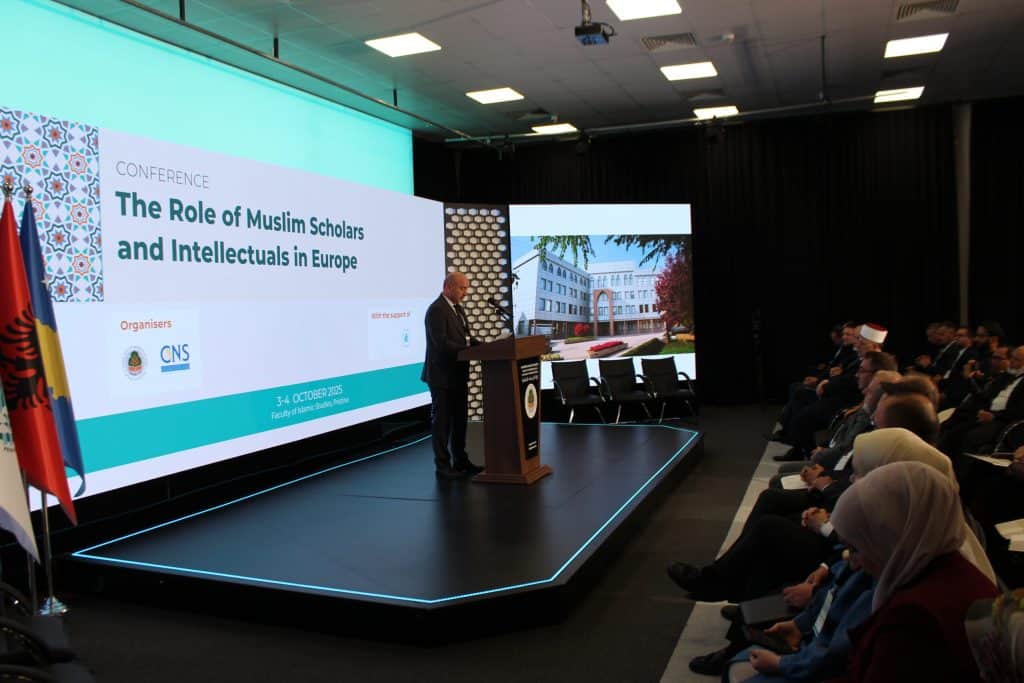
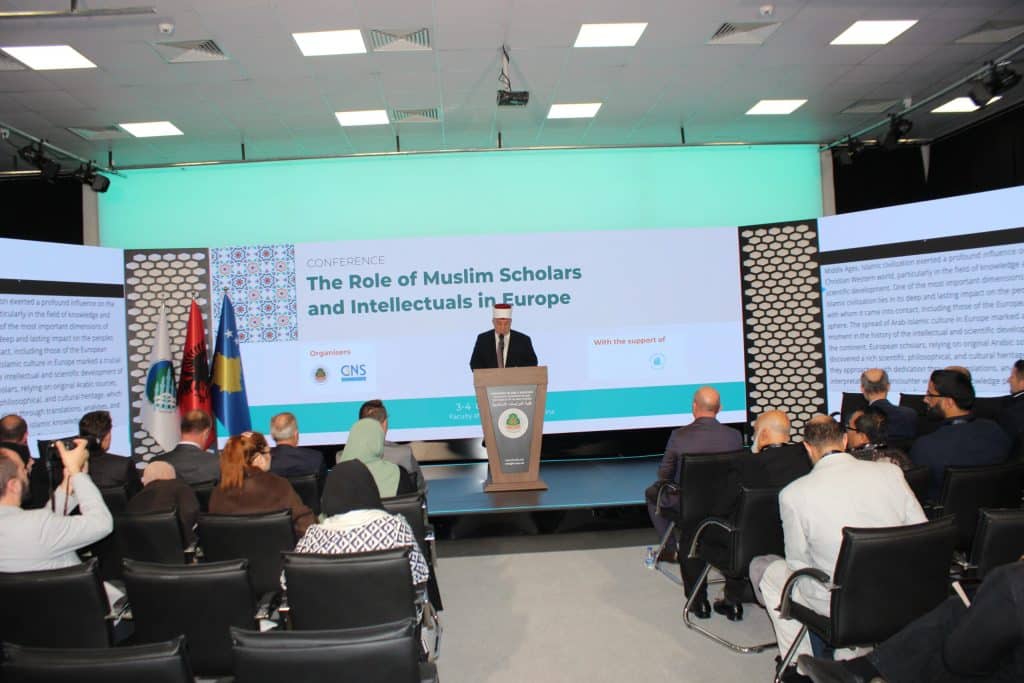
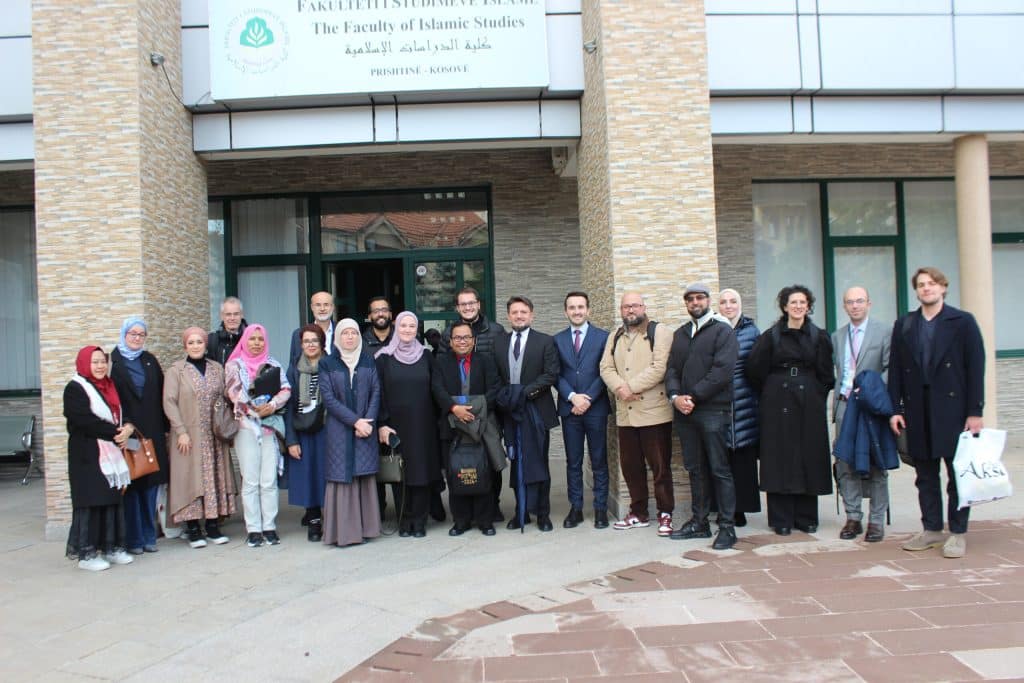
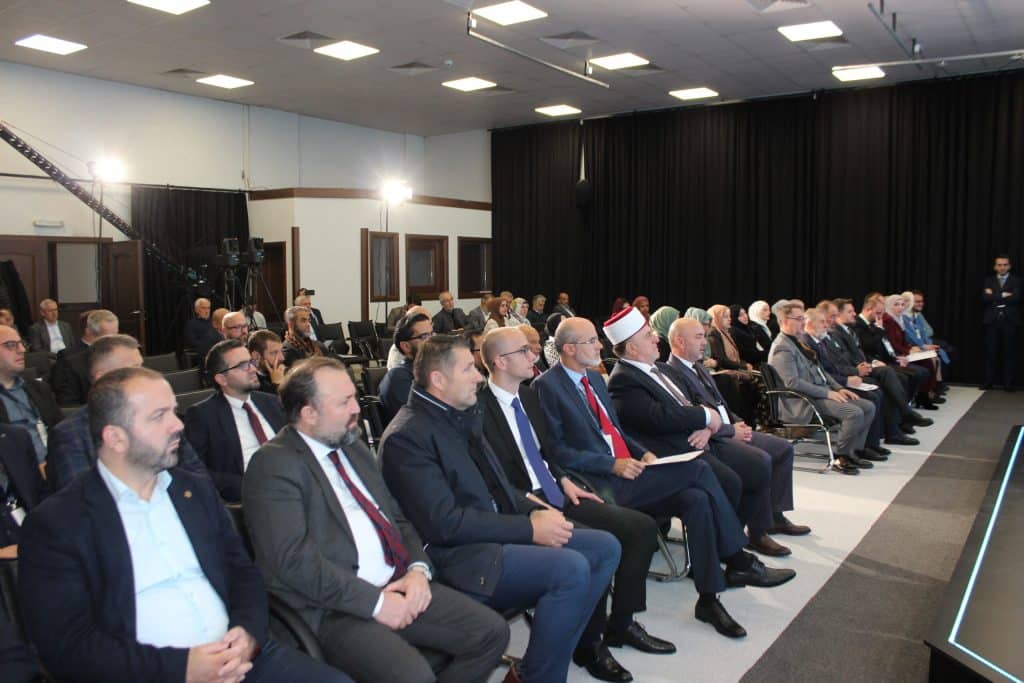
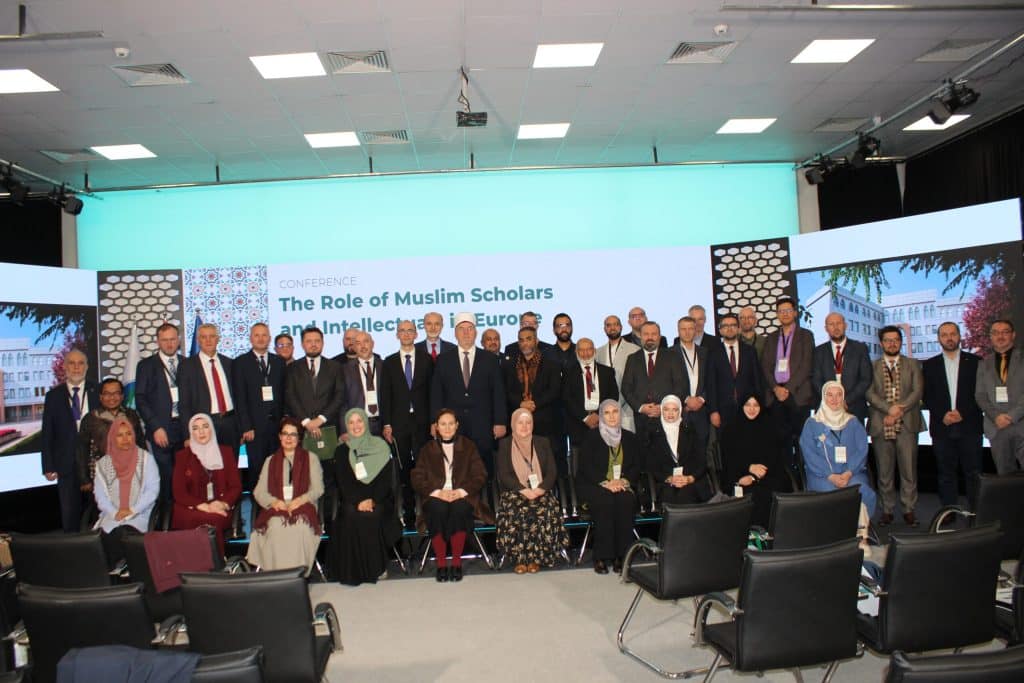
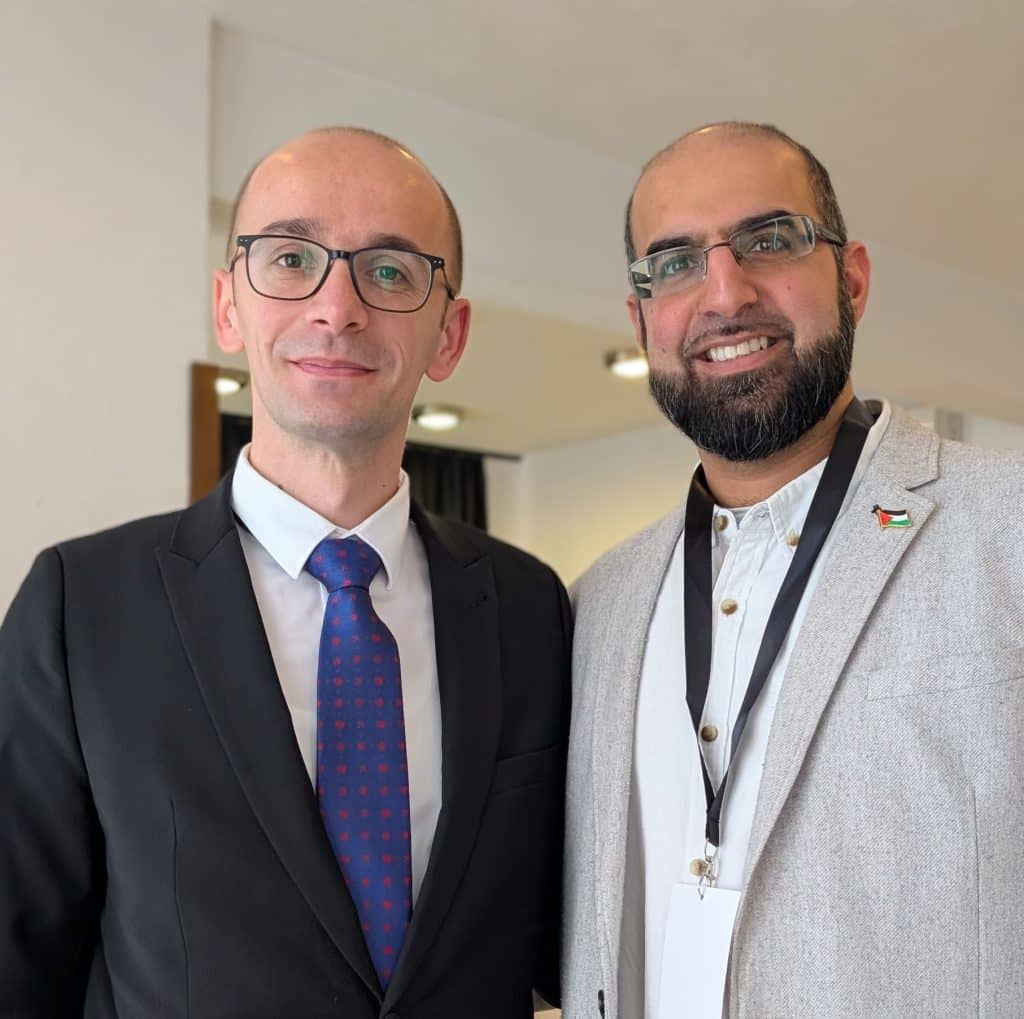
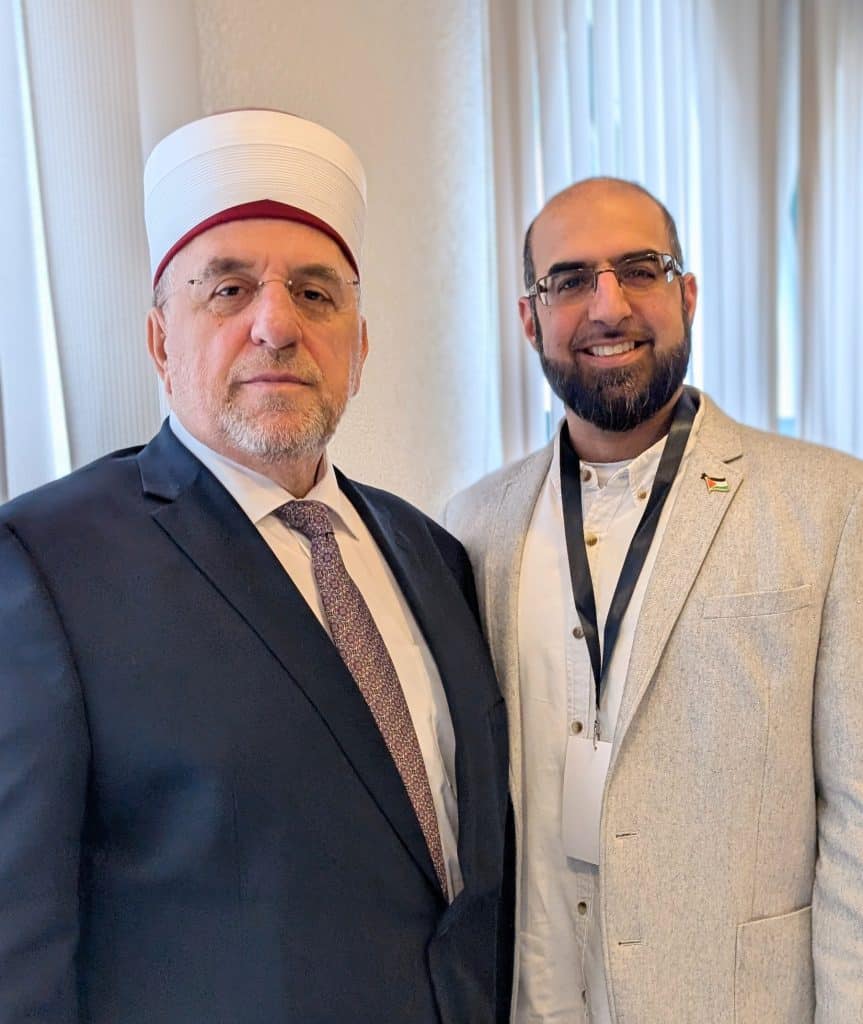
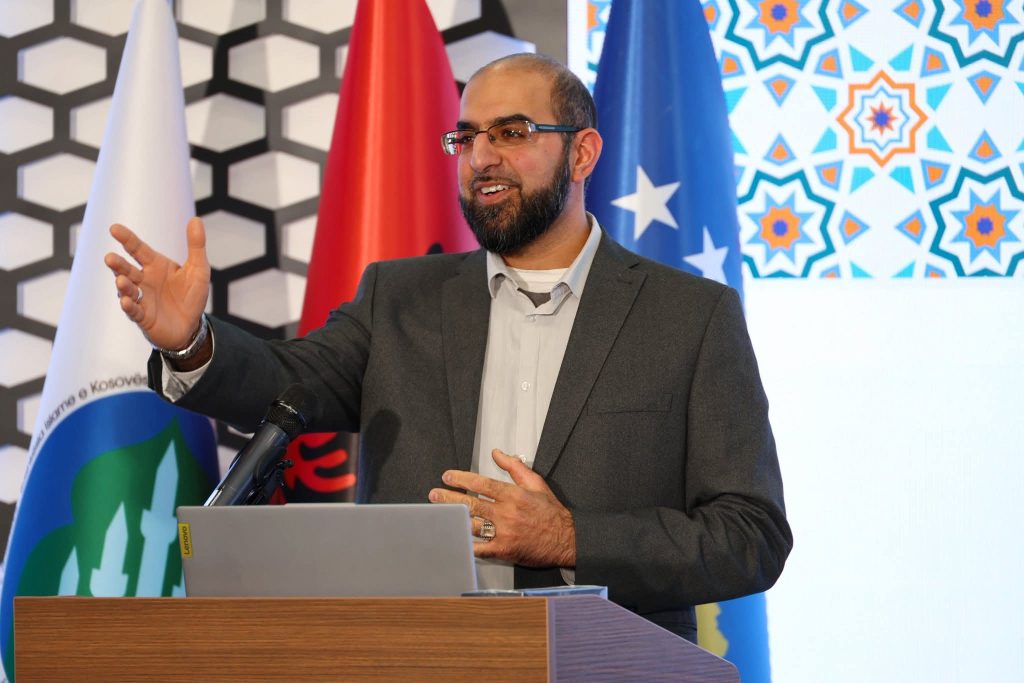
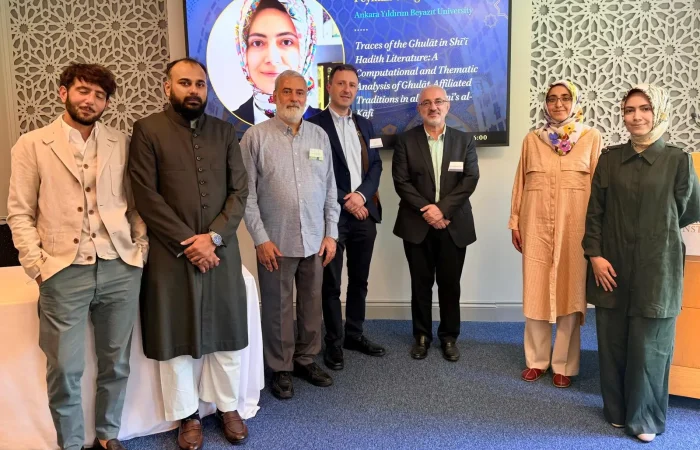
On 3-4 October 2025, Dr Muhammed Reza Tajri was invited to participate in The International Conference, in Pristina, Kosovo, exploring “The Role of Muslim Scholars and Intellectuals in Europe.” The conference was held by the Faculty of Islamic Studies in Pristina, in collaboration with the Center for Advanced Studies in Sarajevo.
The Conference proceedings were opened by an address from Kosovo’s Grand Mufti, Shaykh Naim Ternava. His address stressed the importance of inter-religious and intra-religious harmony, especially in the current challenging times.
The international convention was also attended by Kosovo’s Deputy Foreign Minister, His Excellency, Kreshnik Ahmeti Liza Gashi, with whom Dr Tajri met and shared a conversation about the circumstances of Muslim communities in both Kosovo and the UK. Dr Tajri also had the opportunity to introduce Mr Liza Gashi to some of AMI’s invaluable work in the areas of interfaith and inter-denominational studies.
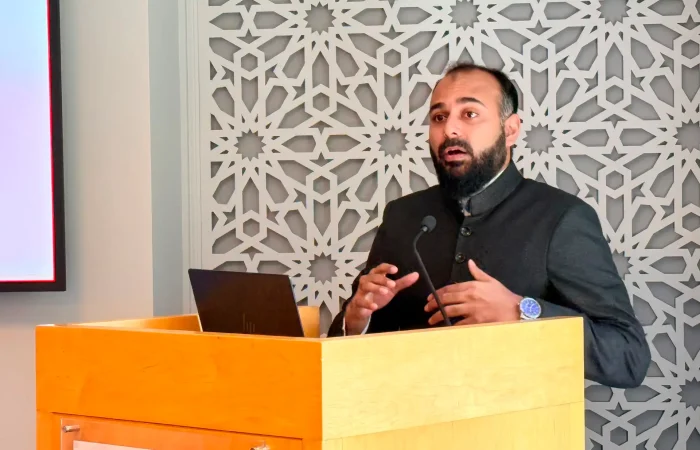
The conference featured an array of around 30 academics presenting from a range of disciplines, from across Europe, under the theme of the conference’s title. The two-day event, which was split into sub-thematic panels, offered an excellent opportunity for networking and sharing of ideas, opening up promising prospects of future collaborative work. Dr Tajri’s own presentation, which was received with great interest and appreciation, was entitled, “Anchored in Europe: Local Shīʿa Scholarship and the Mediation of Transnational Religious Authority”. The abstract can be found below. The full article, from Dr Tajri’s presentation, will be published in the journal of the Faculty of Islamic Studies.
The programme, which spanned over two days, culminated with the hosts organising an eye-opening visit to the historic and beautiful city of Prizren, Kosovo’s main culturally Islamic city, where the Ottoman Empire made its last stand in the Balkan region before its recession.
Abstract
Shīʿa Muslim societies remain markedly understudied within the sociology of Muslims in Europe. Despite making up an estimated 10–15% of Muslims across the continent – with notable concentrations in the UK, Germany, and Sweden – Shīʿa communities have received comparatively little scholarly attention. This research addresses that gap by exploring the sociological dimensions of Shīʿa Muslim life in Europe, particularly in relation to the negotiation of religious scholarly authority in Eurocentric and diasporic contexts.
Using qualitative sociological methods – including structured interviews and participant observation – this study examines the perspectives of grassroots Shīʿa Muslims on the authority of religious scholars. The majority of participants were based in the UK, with supplementary voices from other European contexts. Central to the analysis, is the institutionalised and hierarchical structure of transnational Shīʿī authority, headquartered in the Middle East. The paper interrogates how this transnational authority is constructed and sustained, and explores the interplay between institutional authority and personal religious agency.
The study reveals the intermediary role of Europe-based Shīʿa scholars, who act as conduits between local communities and transnational clerical figures. It also uncovers a spectrum of attitudes among European Shīʿa Muslims: on one end, disillusionment with Middle Eastern religious authorities due to cultural disconnects and gender-norm clashes; on the other, continued loyalty and deference to these same authorities. One key finding is that organically European Shīʿa scholars and institutions are often viewed as lacking in scholarly credibility when compared with their Middle Eastern counterparts – a perception rooted in longstanding theological and sociological dynamics.
In conclusion, the paper argues that transnational Shīʿī religious authority, as presently constituted, struggles to address the specific challenges faced by European Shīʿa communities. As a result, there is an emerging authority vacuum in Europe. This vacuum, the study predicts, will increasingly be filled by organically developed, Europe-based Shīʿī institutions and scholars. The paper offers case examples of such emergent entities and reflects on their potential to reshape the contours of Shīʿī religious life in Europe.