Course Details:
Course Duration: 7 Sessions (Each session: 1.5 hours)
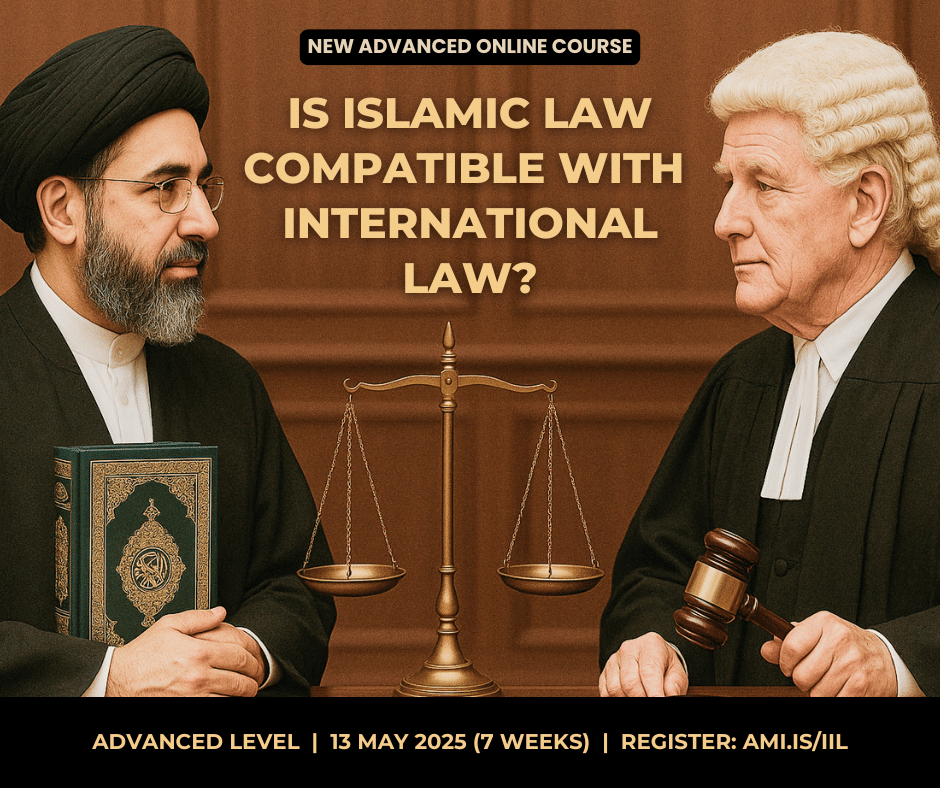
Course Dates: 13th May– 24th June 2025
Course Level: Advanced
Course Instructor: Professor Seyed Mohammad Fatemi
Course Location: Online via Microsoft Teams
Course Fee: £70
Target Audience: Students, Legal practitioners, Scholars of Islamic Studies and International Law
Course Overview:
This advanced-level course explores the intersection between Islamic law (Sharia) and contemporary international legal frameworks. It examines foundational concepts in both traditions, assessing areas of compatibility and divergence. Through a comparative lens, the course evaluates legal theories, human rights, war and peace, criminal justice, and sovereignty, while analysing the engagement of Muslim-majority states with international legal norms. Case studies from various countries and institutions will provide practical insights into the real-world application of these principles.
Course Structure:
Session 1:
Conceptual Framework & Theoretical Foundations of Contemporary International Law
- Overview of International Law: Definition, sources, principles, and key debates
- Major Philosophical Theories: Natural law, positivism, realism, and constructivism
- The Modern Notion of the Nation-State: Sovereignty, territorial integrity, and self-determination
- Comparing Islamic and Western Legal Traditions: Key similarities and differences
Session 2:
Islamic Jurisprudence and International Law
- Key Questions: Is Islamic law compatible with international law?
- Sovereignty in Islam: The concept of Hakimiyyah al-Ilahiyya (Divine Sovereignty) vs. modern state sovereignty
- Muslim-Majority States and Their Engagement with International Law: Case studies from the Middle East, South Asia, and Africa
Session 3:
War and Peace in Contemporary International Law and Fiqh
- Just War Theory in Islam vs. Modern International Law: The Geneva Conventions and Islamic rules of warfare
- Jihad, Rules of Engagement, and Treatment of Prisoners: Comparative perspectives
- Case Studies: Islamic laws of war in historical and contemporary
- The Role of International Institutions: The United Nations and the International Criminal Court (ICC) in conflict resolution
Session 4:
Citizenship & Immigration in Islam and International Law
- Nationality & Immigration in International Law: Theory and practice
- Nationality & Immigration in Islamic Fiqh: Rights of non-Muslims (Dhimmi status), refugees, and asylum seekers
- Modern Challenges: Statelessness, refugee crises, and migration policies in Muslim-majority countries
- Comparative Analysis: European, American, and Middle Eastern approaches to migration and citizenship
Session 5:
Human Rights in Islam and International Law
- The Universal Declaration of Human Rights (UDHR) vs. The Cairo Declaration on Human Rights in Islam (CDHRI)
- Islamic Perspectives on Fundamental Rights: Right to life, freedom, dignity, and justice
- Women’s Rights, Minority Rights, and Religious Freedom in Islamic Law
- Case Studies: Muslim courtiers’ approach to international human rights treaties
- The Role of the Organisation of Islamic Cooperation (OIC) in Human Rights Advocacy
Session 6:
Criminal Justice Law in Islam and International Law
- Islamic Perspectives on Crime and Punishment: Hudud (fixed punishments), Qisas (retribution), and Diya (blood money)
- Comparing Islamic and Secular Legal Systems: Procedural fairness and evidentiary standards
- Islamic Responses to the International Criminal Court (ICC): Critiques and support
Session 7:
Contemporary Challenges and Future Perspectives
- Muslim-Majority States and Their Engagement with International Law: Resistance and adaptation
- Addressing Conflicts Between Islamic Law and Global Legal Norms: Blasphemy laws, apostasy, and freedom of expression
- The Future of Islamic Law in the International Legal Order: Reforms, adaptations, and global trends
- The Role of International Organisations: United Nations, OIC, and regional cooperation efforts
Reading List:
Click here to view Reading List.
Registration:
The Registration fee for this course is £70. To register, please click the button below to complete the online application form.