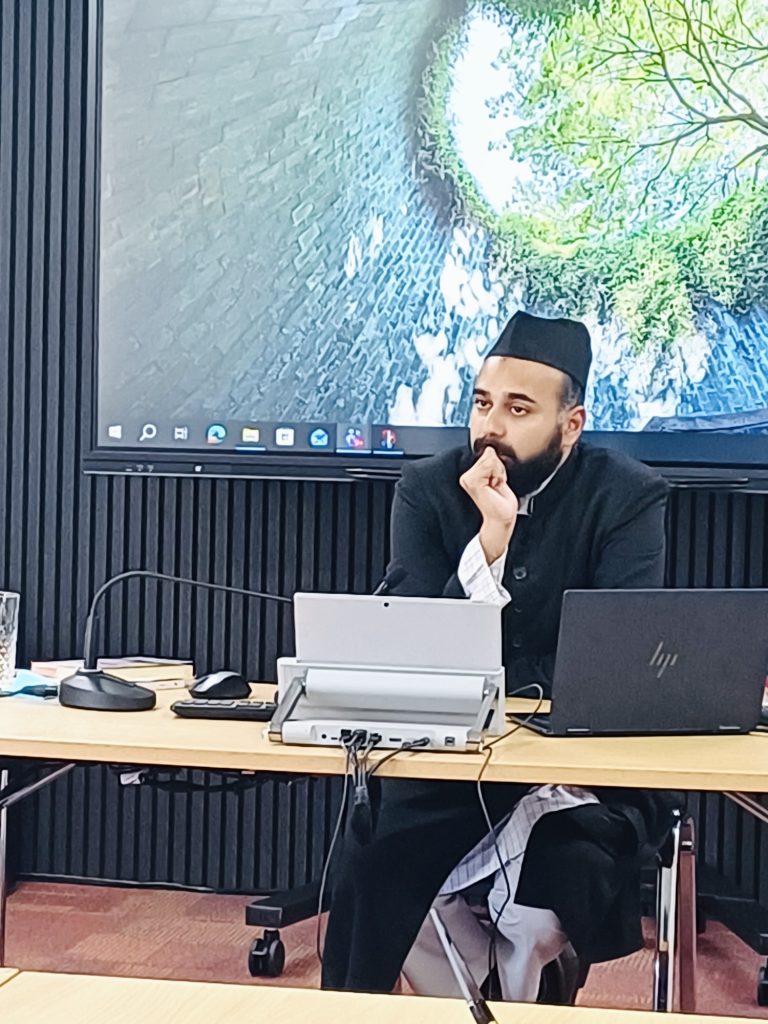
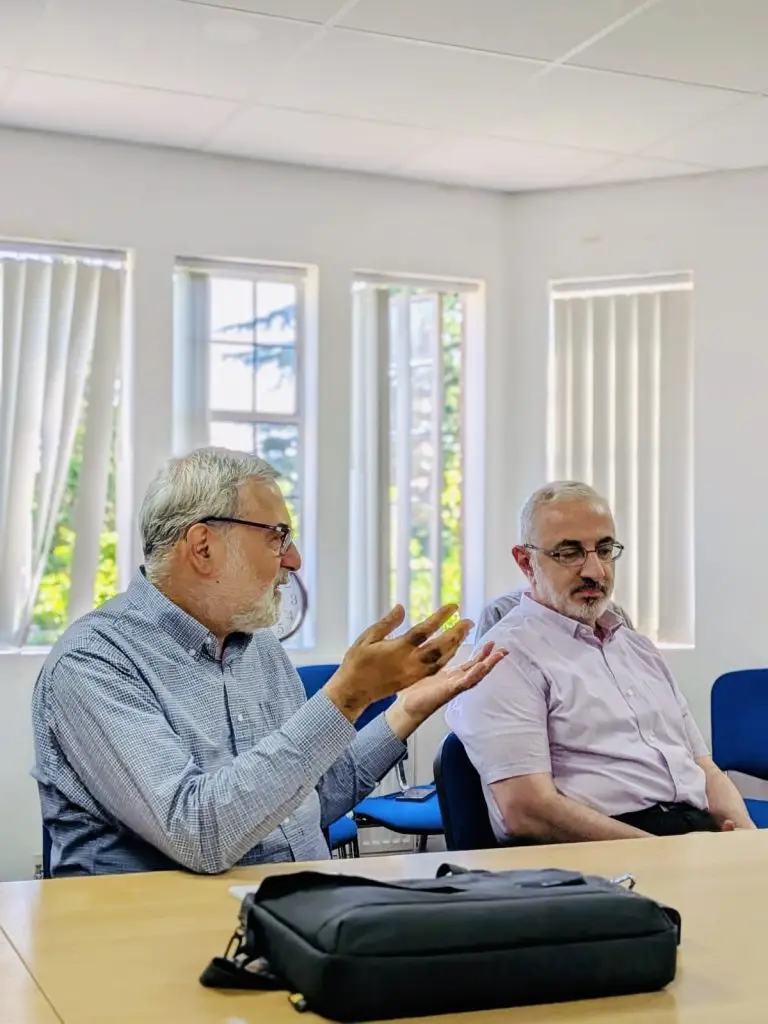
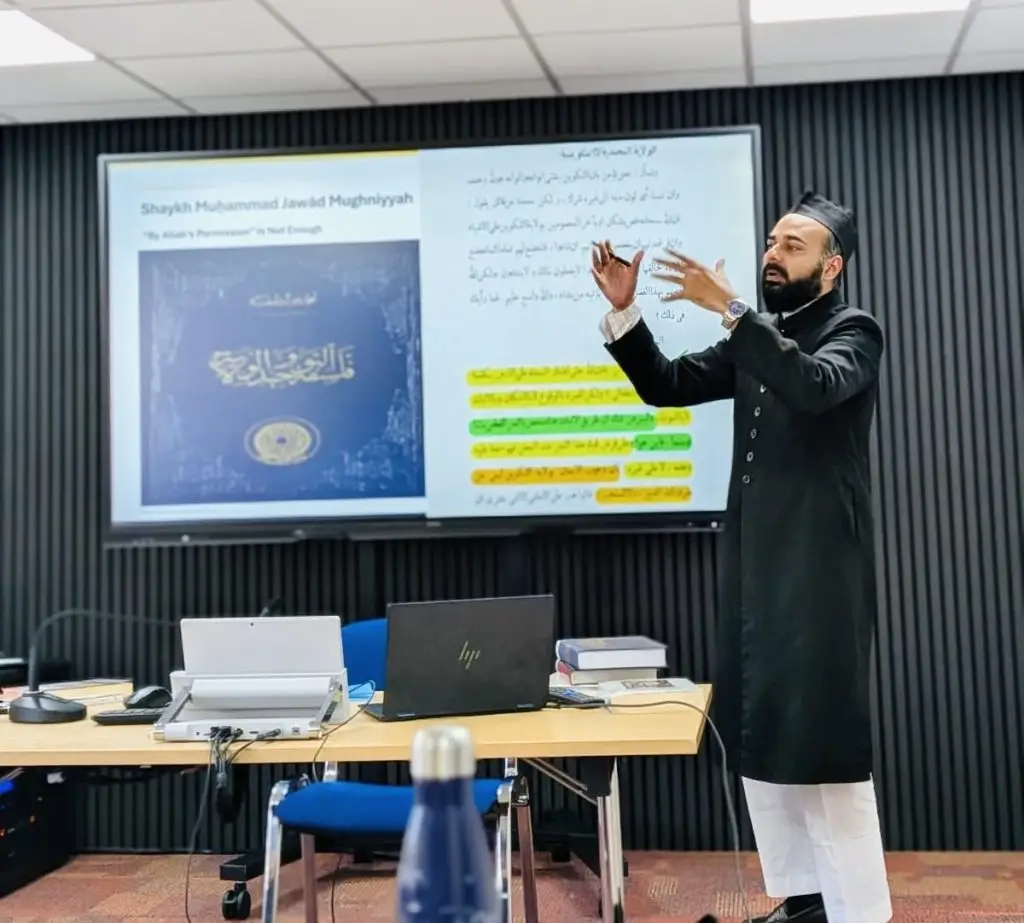
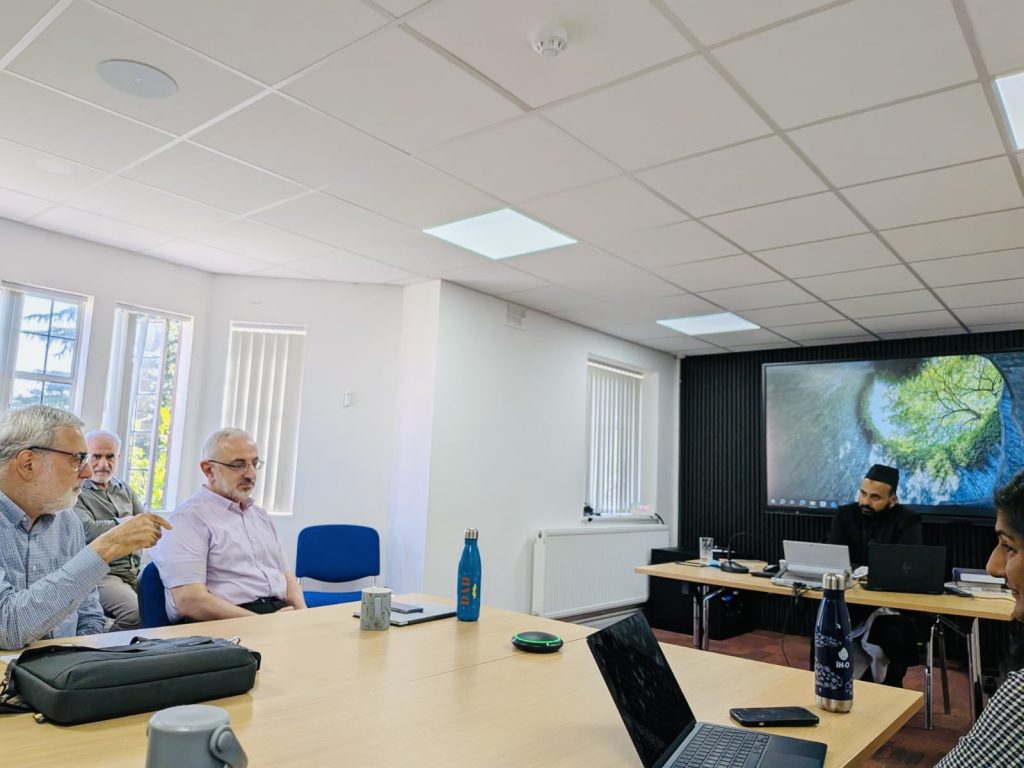
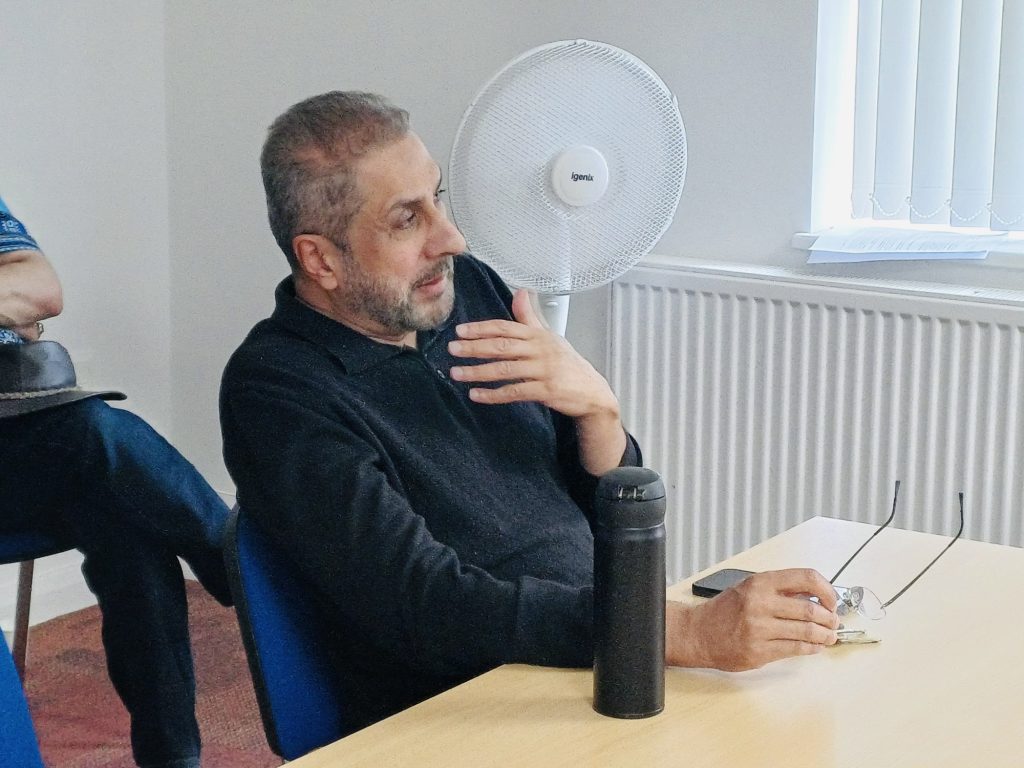
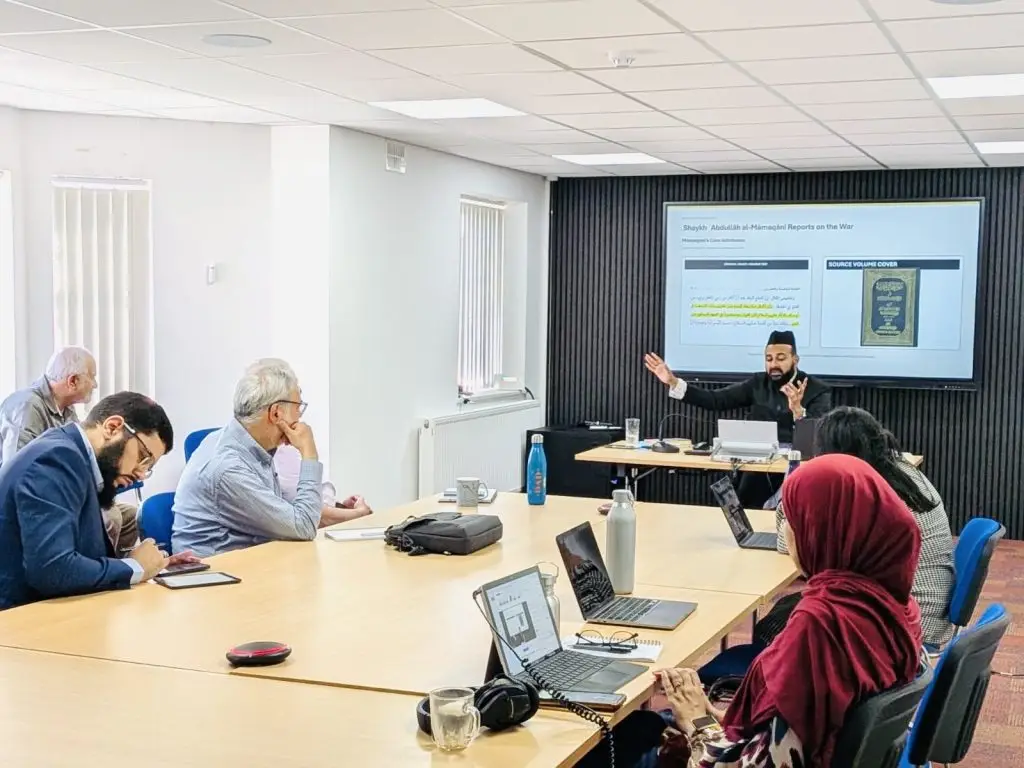
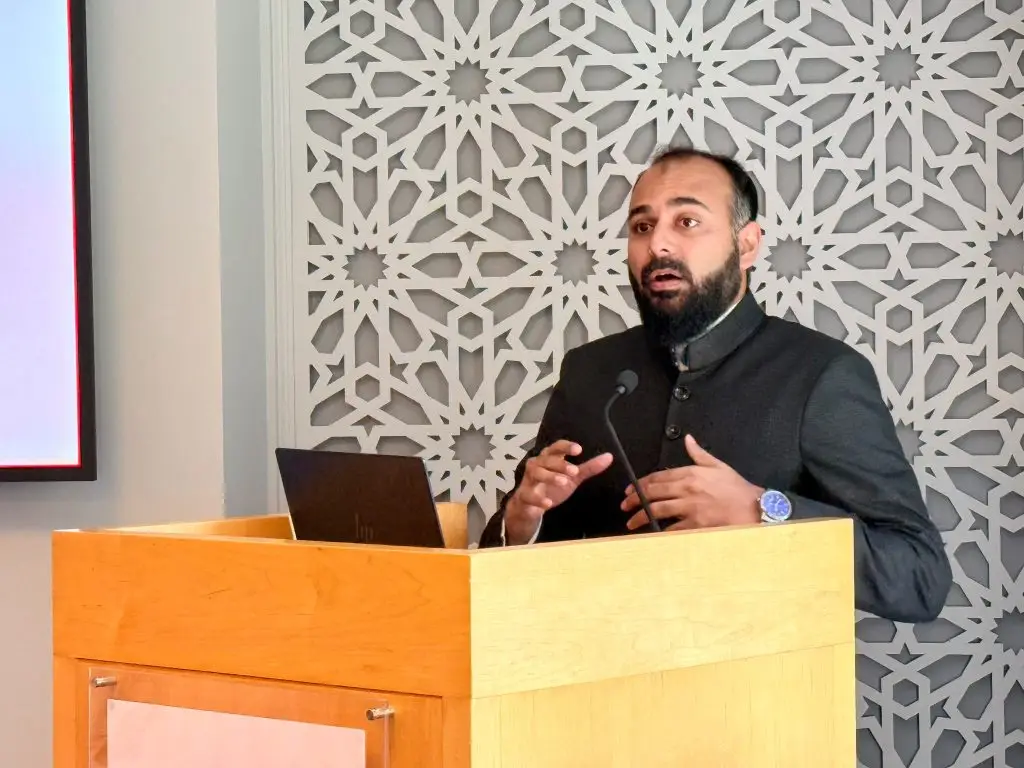
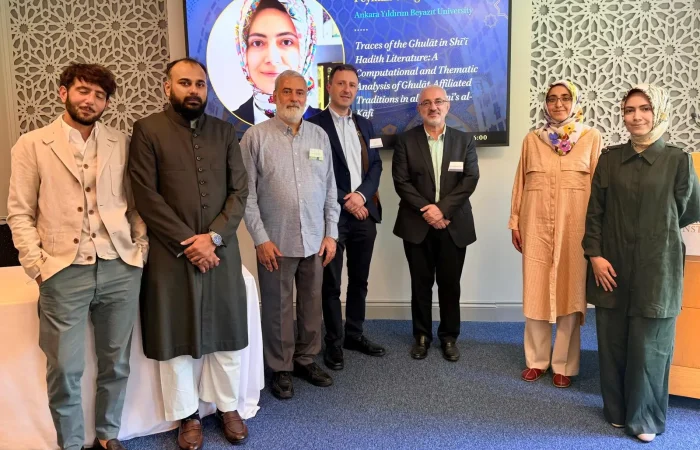
On 15 July 2026, AMI welcomed Dr Syed Ali Hur Kamoonpuri to deliver a research seminar entitled “The Tug of War between Classical and Later Imāmī Creed and its Impact on Contemporary ʿIlm al-Rijāl”. Dr Kamoonpuri examined how theological trends have shaped the science of ʿilm al-rijāl and the evaluation of transmitters, tracing a shift in attitudes towards ghulūw from the classical period through to contemporary scholarship — and arguing that the relationship between creed and narrator criticism runs in both directions.
Key Findings
The Baghdad School and the Critique of Ghulūw
Dr Kamoonpuri argued that the Baghdad school of the Buyid period adopted a critical approach to narrator evaluation grounded in its understanding of ghulūw and its uncompromising stance towards it. The leading representative of this approach, he suggested, was Ibn al-Ghaḍāʾirī, author of Kitāb al-Ḍuʿafāʾ, whom a number of contemporary scholars — including Grand Ayatollah al-Sistani — regard as one of the most important and meticulous rijāl authorities of that period.
A Doctrinal Shift after the Safavid Era
Comparing the judgements of early rijāl scholars with those that emerged after the Safavid era, Dr Kamoonpuri argued that attitudes towards a number of theological doctrines changed significantly. He cited a series of passages from Shaykh ʿAbd Allāh al-Mamaqānī and others maintaining that beliefs once treated as manifestations of ghulūw in the early centuries later came to be counted among the essential doctrines of the Twelver Shiʿi school. That shift, he argued, prompted later scholars to reassess many earlier rijāl evaluations in order to rehabilitate transmitters who had previously been criticised as ghālī figures.
The Contemporary Counter-Current
This trend, Dr Kamoonpuri noted, has been challenged by another contemporary current — represented by scholars such as Ayatollah al-Burūjirdī, Grand Ayatollah al-Sistani and Ayatollah Muḥammad Bāqir al-Ṣadr — which holds that the leading early rijāl authorities reflected a more accurate theological understanding and a sounder assessment of the ghulāt. On this basis he criticised the approach represented by Shaykh al-Mamaqānī, al-Fāḍil al-Jazāʾirī, Shaykh al-Sanad and Shaykh Jaʿfar al-Subḥānī, arguing that it seeks to absolve the ghulāt of the theological criticisms levelled against them and, in consequence, to restore the credibility of their narrations.
Theology and ʿIlm al-Rijāl: A Dialectical Relationship
Dr Kamoonpuri concluded that the result is a dialectical relationship between theology and ʿilm al-rijāl. Doctrinal developments may lead to the rehabilitation of certain transmitters and their reports; the narrations transmitted by those previously discredited ghālī figures then become new textual evidence reinforcing the very contemporary theological tendencies associated with ghulūw.
The seminar was followed by an engaging question-and-answer session and a series of interventions that further enriched the discussion.
Watch the Seminar
Listen to the Seminar
About the Speaker
Dr Syed Ali Hur Kamoonpuri is an academic, researcher and lecturer specialising in Qurʾānic studies, Islamic intellectual history, Arabic language and literature, and Shīʿī studies. Born in Swaziland and educated in Dar es Salaam, Tanzania, he moved to India to pursue higher education at Aligarh Muslim University, where he obtained his Bachelor’s and Master’s degrees in Arabic and Islamic Studies, graduating with distinction and receiving university medals for first position in both his department and faculty.
He was awarded his PhD in 2019 for a four-volume dissertation examining major contributions to the exegesis of Nahj al-Balāgha during the late ʿAbbāsid period. His research interests include Qurʾānic exegesis, Islamic theology, intellectual history, Arabic literature, and the literary heritage of the Ahl al-Bayt (as).
Dr Kamoonpuri has published more than twenty-five research articles in peer-reviewed national and international journals, and has lectured and led workshops for academic, religious and community audiences across the United Kingdom, Canada, the United States, the Middle East and Africa. He has served as Lecturer in Arabic and Islamic Studies in the Department of Arabic Language and Literature at Aligarh Muslim University, teaching Arabic linguistics, Qurʾānic Arabic, translation studies, and classical, medieval and modern Arabic prose and poetry, and has lectured extensively at the Al-Islaah Platform for the past six years.
Gallery